
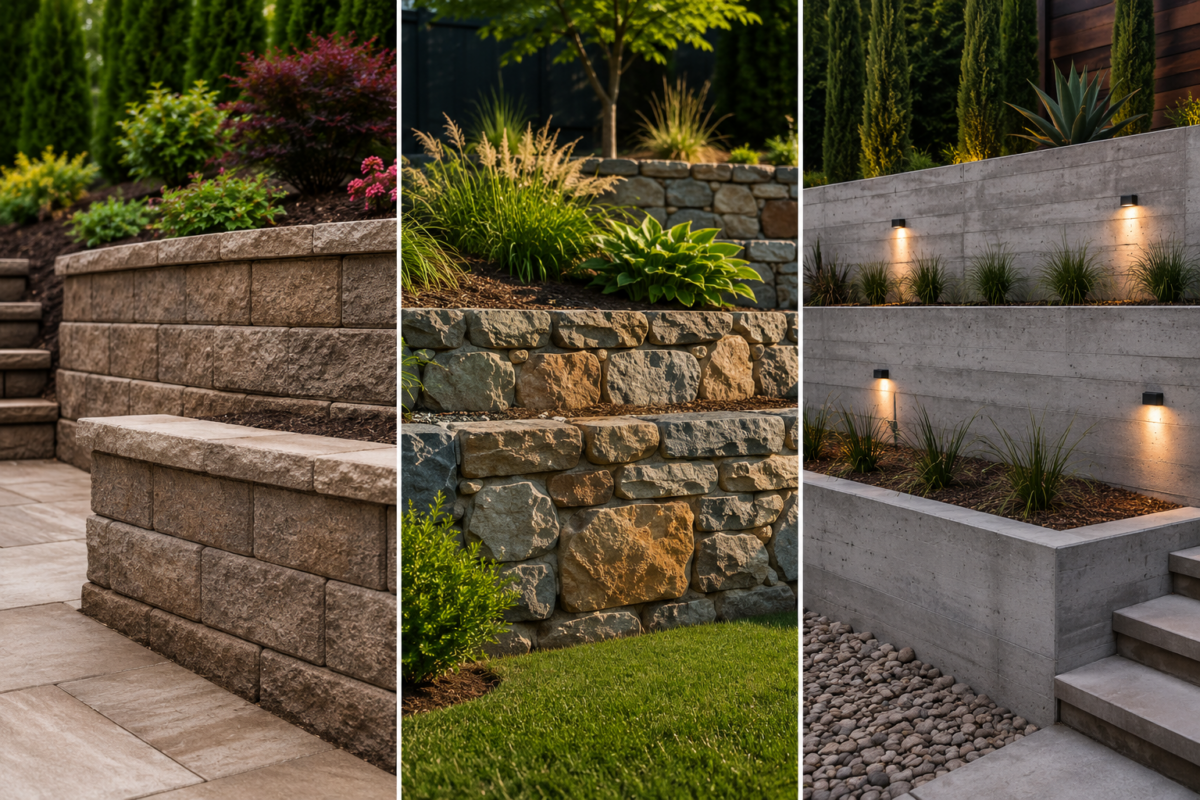

If your yard has a slope, drainage issues, erosion, or uneven usable space, a retaining wall may be one of the smartest investments you can make.
But not all retaining walls are created equal.
The wrong material, poor drainage planning, or improper installation can lead to expensive failures, leaning walls, water damage, and major repairs down the road.
Whether you’re planning a backyard renovation, improving drainage, building usable outdoor space, or simply exploring your options, this guide will walk you through everything homeowners should know before starting a retaining wall project.
We’ll cover:
- What retaining walls actually do
- When you need one
- Different retaining wall types
- Material options
- Drainage requirements
- Costs and pricing factors
- Permits and engineering
- Common mistakes to avoid
- How to choose the right wall for your property
By the end, you’ll be far more prepared for your consultation and confident in making decisions for your outdoor project.
What Is a Retaining Wall?
A retaining wall is a structural feature designed to hold back soil and stabilize sloped land.
Unlike decorative garden borders, retaining walls are engineered to resist pressure from soil, water, and gravity.
They are commonly used to:
- Prevent erosion
- Create level areas on sloped yards
- Improve drainage
- Add functional outdoor living space
- Support patios, driveways, and hardscape features
- Protect foundations and structures
For many homeowners, retaining walls solve practical problems while also dramatically improving curb appeal and backyard functionality.
For example, a steep unusable slope can become:
- A flat entertaining space
- A patio area
- Terraced landscaping
- A lawn or play area
- Functional outdoor living zones
A properly designed retaining wall often becomes the foundation of a successful landscape and hardscape project.
Signs You May Need a Retaining Wall
Not every slope requires a retaining wall, but there are several signs your property may benefit from one.
1. Your Yard Has a Steep Slope
If portions of your yard are difficult to use because of elevation changes, a retaining wall can create flat, usable spaces.
This is especially common in homes with:
- Hillside lots
- Sloped backyards
- Tiered landscaping
- Uneven grading
Instead of wasting square footage, retaining walls can transform unusable land into valuable outdoor space.
2. Soil Erosion Is Becoming a Problem
Are you noticing:
- Soil washing away after rain?
- Exposed roots?
- Mulch constantly moving downhill?
- Mud buildup?
These are signs erosion may be affecting your property.
Retaining walls help stabilize soil and prevent long-term landscape damage.
3. Water Drainage Issues
Pooling water or runoff problems often point to grading challenges.
A retaining wall combined with proper drainage solutions can help redirect water and reduce erosion-related damage.
This is especially important in larger landscape and hardscape projects where patios, walkways, and outdoor living areas are involved.
4. You Want More Usable Outdoor Space
One of the biggest reasons homeowners install retaining walls is to maximize usable square footage.
Instead of a steep slope that serves little purpose, retaining walls allow homeowners to create:
- Outdoor seating areas
- Fire pit spaces
- Patios
- Garden terraces
- Outdoor kitchens
- Lawn areas
5. Cracks or Movement in Existing Landscaping
If an older retaining wall is:
- Leaning
- Cracking
- Bowing outward
- Separating
- Showing drainage issues
it may be failing and require replacement or reinforcement.
Ignoring early signs can lead to larger structural issues later.
Types of Retaining Walls
Choosing the right retaining wall depends on your yard, drainage, elevation changes, budget, and aesthetic goals.
Here are the most common retaining wall types homeowners should know about.
1. Segmental Block Retaining Walls
Segmental retaining walls are one of the most popular choices for residential projects.
These walls use interlocking concrete blocks designed specifically for structural stability.
Pros
- Durable
- Attractive appearance
- Multiple design styles
- Strong structural performance
- Low maintenance
- Excellent longevity
Best For
- Sloped backyards
- Patios
- Garden terraces
- Outdoor living spaces
Potential Drawbacks
- Higher upfront cost than basic materials
- Requires proper installation and drainage
For many homeowners, segmental block walls offer the best balance between durability, appearance, and long-term value.
2. Natural Stone Retaining Walls
Natural stone walls create a timeless, high-end look.
They work especially well for luxury landscapes or homes seeking a more organic aesthetic.
Popular options include:
- Fieldstone
- Limestone
- Granite
- Boulder walls
Pros
- Premium appearance
- Unique natural texture
- Long lifespan
- Strong curb appeal
Best For
- High-end homes
- Custom outdoor living projects
- Decorative and structural applications
Drawbacks
- Higher labor cost
- More expensive materials
- Installation complexity
Natural stone can dramatically elevate the appearance of an outdoor space when properly integrated into a larger landscape design.
3. Concrete Retaining Walls
Poured concrete retaining walls provide a clean, modern look and strong structural support.
They are commonly used for:
- Contemporary designs
- Larger structural walls
- Commercial projects
- Minimalist landscaping
Pros
- Very strong
- Modern appearance
- Customizable finishes
Drawbacks
- Can crack over time
- Requires skilled installation
- Often higher engineering requirements
When done properly, concrete retaining walls can last for decades.
4. Boulder Retaining Walls
Boulder retaining walls use large natural rocks to stabilize slopes.
These walls create a more rustic and natural appearance.
Pros
- Natural aesthetic
- Excellent drainage characteristics
- Strong erosion control
Drawbacks
- Requires heavy equipment
- Less formal appearance
- May take more space
Boulder walls are especially popular for hillside properties and natural-looking landscapes.
5. Timber Retaining Walls
Timber retaining walls were once common but are used less frequently today.
Pros
- Lower upfront cost
- Rustic appearance
Drawbacks
- Shorter lifespan
- Rot risk
- Less structural durability
For long-term value, most homeowners today choose concrete block, stone, or reinforced systems instead.
Why Drainage Matters More Than Almost Anything Else
If there is one thing homeowners should understand about retaining walls, it is this:
Most retaining wall failures happen because of poor drainage.
Water buildup behind the wall creates pressure called hydrostatic pressure.
Without proper drainage, this pressure pushes against the wall over time.
Eventually, walls may:
- Lean forward
- Crack
- Bulge
- Shift
- Collapse
Even expensive retaining walls can fail if drainage is ignored.
Proper Retaining Wall Drainage Usually Includes:
Gravel Backfill
Drainage rock behind the wall allows water to move freely.
Perforated Drain Pipes
Drain systems help redirect water away from the wall.
Proper Grading
The surrounding yard should direct water appropriately.
Drainage Outlets
Water needs a place to exit safely.
Why Cheap Installations Fail
One of the biggest mistakes homeowners make is choosing the lowest bid.
Some contractors reduce costs by skipping:
- Drain systems
- Proper excavation
- Reinforcement
- Quality base preparation
The result?
A wall that looks good initially but develops problems years earlier than expected.
A properly installed retaining wall is as much about engineering and drainage as appearance.
How Much Does a Retaining Wall Cost?
One of the first questions homeowners ask is:
“How much does a retaining wall cost?”
The honest answer is: it depends.
Retaining wall pricing varies significantly based on height, materials, drainage needs, engineering requirements, access to the yard, and the complexity of the installation.
Smaller decorative walls may cost a few thousand dollars, while larger structural retaining walls can become major investments.
Average Retaining Wall Cost Ranges
While every project is unique, homeowners can generally expect:
| Retaining Wall Type | Typical Cost Range |
|---|---|
| Small decorative wall | $3,000 – $8,000 |
| Medium backyard retaining wall | $8,000 – $20,000+ |
| Large structural retaining wall | $20,000 – $60,000+ |
| Engineered hillside wall | $50,000+ |
Keep in mind that these are broad estimates. The only accurate way to determine cost is through a site evaluation.
What Impacts Retaining Wall Pricing?
Several factors influence the total project cost.
1. Wall Height
In general, taller walls cost significantly more.
Why?
Because taller retaining walls often require:
- Deeper excavation
- More material
- Reinforcement
- Drainage systems
- Engineering
- Permit approvals
A decorative 2-foot garden wall is very different from a 6-foot structural retaining wall supporting major soil pressure.
2. Material Selection
Different materials come with different price points.
Budget-Friendly Options
- Basic concrete block
- Timber (limited use)
Mid-Range Options
- Segmental retaining wall systems
- Decorative block
Premium Options
- Natural stone
- Custom masonry
- Architectural concrete finishes
Material choice affects not only price, but also maintenance, appearance, and lifespan.
3. Drainage Requirements
Some yards require more advanced drainage systems than others.
Additional drainage components may include:
- French drains
- Gravel backfill
- Perforated pipe systems
- Surface drainage improvements
- Channel drains
The more water management required, the higher the project cost.
However, drainage is not an area homeowners should cut corners on.
4. Site Access
Can equipment easily access the project area?
Or does everything need to be transported manually through gates or tight spaces?
Limited access often increases labor costs.
This is especially common in:
- Hillside properties
- Tight side yards
- Backyard-only access homes
5. Engineering & Permits
Larger retaining walls often require engineering plans and city permits.
These additional steps increase project costs but help ensure long-term safety and compliance.
Do Retaining Walls Require Permits?
Sometimes yes.
Sometimes no.
It depends on:
- Wall height
- Location
- Structural load
- Local city requirements
- Property line placement
In many areas, retaining walls above a certain height require permits and engineering.
This is especially true if the wall:
- Supports a slope
- Holds substantial soil
- Is near a structure
- Impacts drainage
- Is close to neighboring property
Why Engineering Matters
For larger retaining walls, engineering is often not optional.
An engineered retaining wall accounts for:
- Soil pressure
- Drainage
- Reinforcement
- Slope stability
- Load-bearing concerns
Skipping engineering can lead to:
- Structural failure
- Permit problems
- Property damage
- Costly repairs
A professionally designed wall may cost more upfront, but it significantly reduces long-term risk.
Common Retaining Wall Mistakes Homeowners Should Avoid
Retaining walls may look simple, but many expensive problems start with poor planning or improper installation.
Here are some of the most common mistakes homeowners make.
Mistake #1: Ignoring Drainage
This is by far the biggest issue.
Many failed retaining walls look fine at first.
Then water pressure builds behind the wall.
Eventually:
- Cracks appear
- Walls lean outward
- Soil shifts
- Structural failure occurs
Proper drainage is not optional.
It is essential.
Mistake #2: Choosing Materials Based Only on Price
Cheaper materials may lower upfront costs, but often lead to:
- More maintenance
- Shorter lifespan
- Faster deterioration
- Reduced curb appeal
A retaining wall is a long-term structural investment.
Choosing the right material matters.
Mistake #3: Underestimating Structural Needs
Some homeowners assume retaining walls are simple cosmetic features.
But once soil pressure increases, structural requirements become very important.
Poorly designed walls may fail years earlier than expected.
Mistake #4: DIY Large Retaining Walls
Small garden walls may be manageable for experienced DIY homeowners.
Structural retaining walls are different.
Large retaining walls involve:
- Excavation
- Drainage systems
- Soil stability
- Load calculations
- Reinforcement
- Permit requirements
Mistakes can become extremely expensive.
Mistake #5: Hiring the Cheapest Contractor
Low bids often leave out important structural elements.
Some contractors reduce costs by cutting corners on:
- Drainage
- Base preparation
- Excavation depth
- Reinforcement
- Materials
A retaining wall should be built for long-term durability, not just short-term appearance.
How Long Do Retaining Walls Last?
The lifespan of a retaining wall depends heavily on:
- Material quality
- Installation
- Drainage
- Soil conditions
- Maintenance
Average Lifespan by Material
Concrete Block Walls
50+ years
Natural Stone Walls
50 to 100+ years
Concrete Retaining Walls
40 to 75+ years
Timber Walls
10 to 20 years
Boulder Walls
50+ years
The biggest factor affecting lifespan is usually not the material itself.
It is whether the wall was installed correctly.
Poor drainage can shorten the life of even premium materials.
How to Choose the Right Retaining Wall for Your Yard
There is no single “best” retaining wall.
The right solution depends on your goals.
Ask yourself:
What Is the Main Purpose?
Are you trying to:
- Prevent erosion?
- Create usable space?
- Improve aesthetics?
- Solve drainage problems?
- Support a patio or hardscape feature?
Your goals affect the design approach.
What Style Do You Want?
For modern homes, concrete may work well.
For natural aesthetics, stone or boulders may feel more integrated.
For versatile backyard design, segmental block systems are often a popular balance of style and performance.
What Is Your Budget?
Understanding your investment range helps narrow down material choices and project scope.
Sometimes homeowners choose a phased approach:
Start with structural needs first, then add landscaping and hardscape upgrades over time.
How Important Is Maintenance?
Some materials require less upkeep than others.
Choosing a lower-maintenance option may provide better long-term value.
Frequently Asked Questions About Retaining Walls
Do retaining walls add value to a home?
In many cases, yes.
Retaining walls can improve:
- Curb appeal
- Drainage
- Functionality
- Outdoor living space
- Property usability
Well-designed hardscape improvements often make homes more attractive to future buyers.
How tall can a retaining wall be without a permit?
This varies by city and local building code.
Permit requirements often change based on wall height and structural conditions.
A professional evaluation can help determine what applies to your property.
What is the best material for a retaining wall?
There is no universal answer.
The best material depends on:
- Budget
- Style preferences
- Structural needs
- Desired lifespan
- Property conditions
Concrete block, natural stone, and reinforced systems are among the most common long-term solutions.
Can retaining walls help with drainage?
Yes, when designed properly.
Many retaining walls include integrated drainage systems to help manage water flow and reduce erosion problems.
How long does retaining wall installation take?
Smaller projects may take several days.
Larger or engineered retaining walls may take multiple weeks depending on complexity, permits, weather, and access.
Final Thoughts: Investing in the Right Retaining Wall
A retaining wall is much more than a decorative feature.
When designed and installed correctly, it can:
- Protect your property
- Prevent erosion
- Improve drainage
- Create usable outdoor space
- Support patios and hardscape features
- Improve the overall look and functionality of your yard
The key is choosing the right design, materials, and installation approach for your specific property.
Because every yard is different, retaining wall projects benefit from thoughtful planning and professional evaluation.
At Milan Build, we help homeowners design retaining walls that are both functional and visually integrated into the overall landscape and hardscape design. Whether you need structural support, improved drainage, or a complete outdoor transformation, our team can help guide you through the best options for your space.
Thinking about a retaining wall project? Contact Milan Build to schedule a consultation and explore the right solution for your property.