
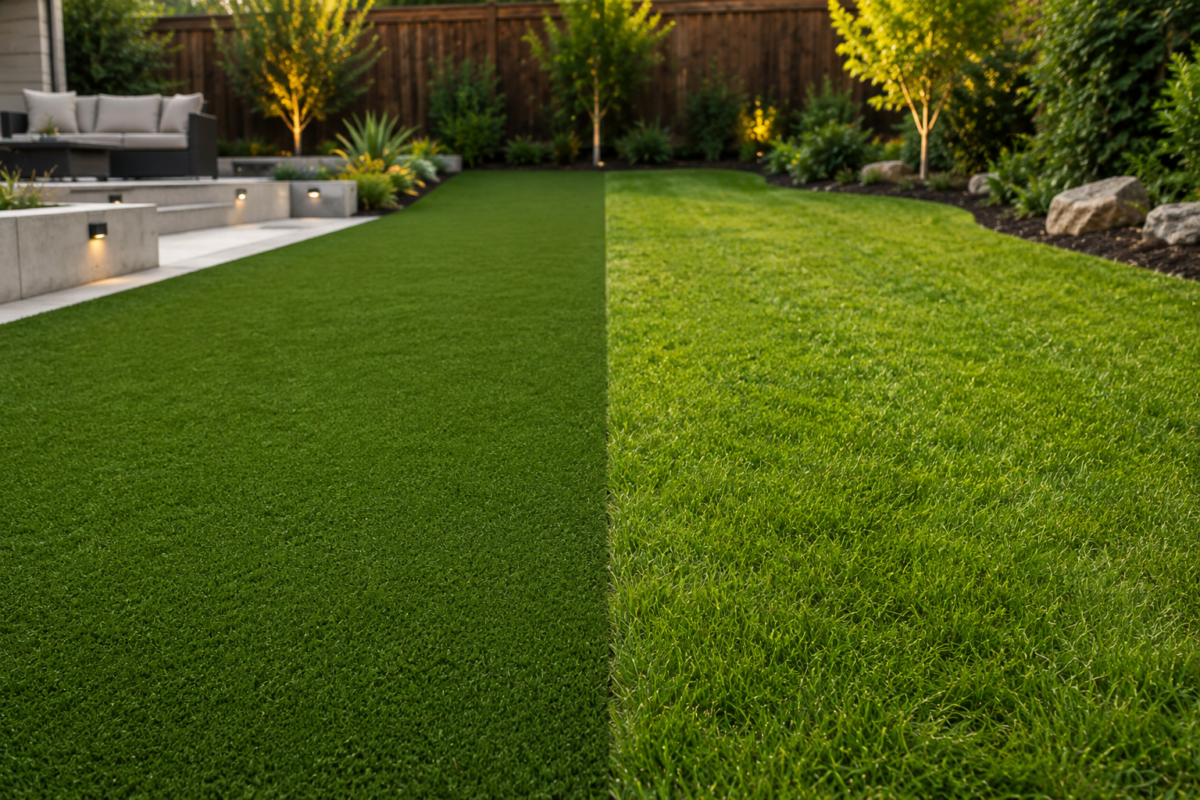

When planning a backyard renovation or landscape project, one of the biggest decisions homeowners face is:
Should you install artificial turf or natural grass?
The answer depends on your lifestyle, maintenance preferences, budget, water usage goals, pets, and how you plan to use your outdoor space.
For some homeowners, a perfectly green lawn year-round with minimal maintenance sounds ideal.
For others, nothing compares to the feel and natural look of real grass.
The truth is:
Neither option is universally better.
Each has pros, cons, costs, and ideal use cases.
In this guide, we’ll break down everything homeowners should know before making a decision, including:
- Artificial turf vs natural grass costs
- Maintenance requirements
- Water savings
- Durability
- Pets and kids
- Heat concerns
- Drainage
- Environmental considerations
- Lifespan
- Which option makes the most sense for your property
By the end, you’ll be much better prepared to make the right decision for your yard and your lifestyle.
Artificial Turf vs Natural Grass: Quick Overview
Before diving deeper, here is a quick side-by-side comparison.
| Feature | Artificial Turf | Natural Grass |
|---|---|---|
| Upfront Cost | Higher | Lower |
| Maintenance | Very low | Moderate to high |
| Water Usage | Minimal | High |
| Appearance | Consistent year-round | Seasonal changes |
| Lifespan | 15 to 20+ years | Ongoing replacement |
| Heat | Can get hot | Naturally cooler |
| Pet Friendly | Excellent (with proper drainage) | Good |
| Environmental Impact | Less water use | Natural ecosystem |
| Repairs | Occasional | Frequent maintenance |
The best choice depends on how you plan to use your yard.
What Is Artificial Turf?
Artificial turf is a synthetic grass system designed to mimic the look and feel of natural grass.
Modern turf systems are much more advanced than older versions.
Today’s high-quality turf can include:
- Realistic grass blades
- Multi-tone coloring
- Drainage systems
- Cooling infill options
- Pet-friendly materials
- Soft padding for comfort
Artificial turf is commonly installed in:
- Front yards
- Backyards
- Pet areas
- Play spaces
- Side yards
- Pool areas
- Outdoor living spaces
For many homeowners, turf is attractive because it delivers a consistently clean and green appearance with minimal upkeep.
What Is Natural Grass?
Natural grass is exactly what it sounds like:
A living lawn that grows naturally in soil.
Common residential grass options vary by region and climate, but natural lawns generally require:
- Irrigation
- Mowing
- Fertilization
- Weed control
- Seasonal maintenance
- Reseeding or repairs
Despite the upkeep, many homeowners still prefer natural grass because of its softness, cooling effect, and authentic appearance.
Upfront Cost: Turf vs Grass
One of the biggest differences between artificial turf and natural grass is the initial investment.
Artificial Turf Costs
Artificial turf typically costs more upfront because installation involves:
- Excavation
- Base preparation
- Compaction
- Drainage layers
- Weed barriers
- Turf installation
- Infill materials
Average Artificial Turf Cost
Homeowners often spend:
$12 to $25+ per square foot installed
Pricing varies depending on:
- Turf quality
- Drainage needs
- Site preparation
- Yard accessibility
- Existing grading
- Pet systems
- Specialty padding
Premium installations can exceed these ranges.
While the upfront investment may feel significant, turf often lowers long-term maintenance costs.
Natural Grass Costs
Natural grass typically costs less initially.
Average Natural Grass Cost
Homeowners often spend:
$2 to $8+ per square foot installed
This may include:
- Sod installation
- Seeding
- Soil preparation
- Irrigation setup
- Grading
However, lower upfront cost does not necessarily mean lower lifetime cost.
Natural grass requires ongoing spending year after year.
Long-Term Cost Comparison
This is where things get more interesting.
While turf costs more initially, homeowners often spend less over time because maintenance is dramatically reduced.
Ongoing Costs of Natural Grass
Natural lawns typically require:
- Water bills
- Lawn mowing
- Fertilizer
- Weed control
- Pest treatment
- Aeration
- Reseeding
- Repairs for dead patches
Over 10 to 15 years, these recurring costs add up significantly.
Artificial Turf Maintenance Costs
Artificial turf generally requires:
- Occasional rinsing
- Brushing
- Debris removal
- Minor infill replenishment
For pet owners, occasional deodorizing treatments may be helpful.
Many homeowners choose turf specifically to reduce maintenance headaches and recurring lawn expenses.
Maintenance: Which Option Is Easier?
If minimizing maintenance is your priority, artificial turf usually wins.
Artificial Turf Maintenance
Artificial turf maintenance is relatively simple.
Most homeowners only need to:
- Blow leaves
- Rinse occasionally
- Brush fibers periodically
- Remove debris
- Clean pet waste
No mowing.
No watering.
No fertilizing.
No weeds (for the most part).
This makes turf especially attractive for busy homeowners or rental properties.
Natural Grass Maintenance
Natural lawns require consistent attention.
Regular upkeep may include:
- Weekly mowing
- Watering
- Fertilization
- Weed prevention
- Seasonal care
- Patch repair
For homeowners who enjoy lawn care, this may not feel like a drawback.
For others, it becomes a recurring burden.
Water Usage & Sustainability
In areas with water restrictions or high utility costs, this factor matters a lot.
Artificial Turf Water Savings
Artificial turf uses very little water.
Most homeowners only rinse turf occasionally for cleaning.
This can significantly reduce outdoor water consumption.
For drought-prone regions, turf can be a practical long-term investment.
Natural Grass Water Needs
Natural grass requires regular irrigation to stay healthy and green.
Depending on climate and season, this can mean substantial water use.
Without proper watering:
- Grass browns
- Bare patches develop
- Weeds increase
- Lawn quality declines
Water cost is often one of the biggest long-term expenses of maintaining natural grass.
Durability: Which Holds Up Better?
Artificial Turf Durability
Artificial turf performs extremely well in high-traffic areas.
This makes it popular for:
- Kids
- Pets
- Entertaining
- Rental properties
- Frequent backyard use
Turf generally resists:
- Mud
- Dead spots
- Heavy wear
- Compaction
High-quality turf systems often last:
15 to 20+ years
Natural Grass Durability
Natural grass can struggle in high-use areas.
Heavy foot traffic may lead to:
- Bare spots
- Compaction
- Mud
- Worn patches
Lawns often need periodic reseeding or repairs.
For lightly used spaces, natural grass may still perform beautifully.
Pets & Kids: Which Option Works Better?
For families and pet owners, this is often one of the biggest deciding factors.
The good news?
Both artificial turf and natural grass can work well. The better choice depends on how your yard is used.
Artificial Turf for Pets
Modern pet-friendly turf systems are specifically designed for dogs and high-traffic use.
Benefits include:
- No muddy paws
- No digging damage
- Better durability
- Easier cleanup
- Less lawn damage from urine
Many turf systems include drainage layers that allow liquids to pass through quickly.
For dog owners, this often means:
- Cleaner yards
- Less maintenance
- More durability year-round
However, proper installation matters.
Pet turf should include:
- Proper drainage
- Odor-control systems
- Antimicrobial infill (when appropriate)
Without proper drainage, odor problems can develop.
Natural Grass for Pets
Natural grass feels softer and stays cooler, which many pets enjoy.
However, pets may also create challenges such as:
- Brown urine spots
- Mud patches
- Holes from digging
- Worn paths
High dog activity often requires reseeding or lawn repairs over time.
For households with multiple dogs, maintenance becomes significantly more demanding.
Artificial Turf vs Natural Grass for Kids
Artificial Turf
Artificial turf is popular for play areas because it:
- Stays clean
- Prevents muddy messes
- Holds up under heavy use
- Looks consistent year-round
Some installations include padded underlayers for extra safety.
This can make turf appealing for:
- Play areas
- Sports
- Backyard recreation
Natural Grass
Natural grass offers:
- Softer feel
- Cooler surface temperatures
- Natural cushioning
- Traditional backyard experience
For active kids, grass can wear down faster in heavy-use areas.
Families often weigh:
lower maintenance vs natural feel
when making this decision.
Heat: One of the Biggest Downsides of Artificial Turf
This is one of the most important factors homeowners should understand.
Artificial turf can get significantly hotter than natural grass.
Especially during warm summer months.
Why Does Turf Get Hot?
Synthetic materials absorb and retain heat more than living grass.
On sunny days, turf temperatures can rise noticeably.
This becomes especially important for:
- Kids
- Pets
- Barefoot walking
- Pool areas
Ways to Reduce Turf Heat
The good news is there are ways to minimize this issue.
Some homeowners choose:
Cooling Infill
Certain turf systems are designed to reduce heat retention.
Shade Structures
Pergolas, shade sails, awnings, and trees can dramatically improve comfort.
Strategic Yard Design
Combining turf with hardscape and shaded zones often creates a better outdoor experience.
Occasional Water Cooling
Lightly spraying turf can temporarily reduce surface temperatures.
Natural Grass Stays Cooler
One of the biggest advantages of natural grass is its cooling effect.
Living grass naturally regulates temperature better than synthetic surfaces.
If barefoot comfort and cooler surfaces are priorities, natural grass often wins.
Drainage: What Homeowners Need to Know
Drainage matters regardless of which option you choose.
Artificial Turf Drainage
A properly installed turf system should include drainage beneath the surface.
Good turf systems allow water to pass through quickly.
This helps reduce:
- Standing water
- Mud
- Pooling
- Pet odor buildup
Poor installation, however, can create drainage problems.
This is why proper grading and base preparation matter.
A quality installation is about much more than simply rolling out turf.
Natural Grass Drainage
Natural lawns absorb water naturally through soil.
However, drainage problems can still occur if:
- Soil is compacted
- Grading is poor
- Irrigation is excessive
- Clay-heavy soil exists
Common problems include:
- Pooling water
- Muddy sections
- Dead grass
- Erosion
In some yards, drainage improvements may be necessary regardless of which surface you choose.
Environmental Considerations
This topic often sparks debate.
The truth is:
Both options have environmental pros and cons.
Artificial Turf Environmental Benefits
Artificial turf may reduce:
- Water usage
- Fertilizer runoff
- Pesticide use
- Gas-powered mowing
For drought-prone areas, reduced water consumption can be a major advantage.
Artificial Turf Environmental Drawbacks
Concerns sometimes include:
- Synthetic materials
- Heat retention
- Manufacturing footprint
- End-of-life disposal
Not all turf products are created equal.
Higher-quality systems often perform better and last longer.
Natural Grass Environmental Benefits
Natural grass:
- Produces oxygen
- Supports soil ecosystems
- Helps absorb rainwater
- Stays naturally cooler
Many homeowners simply prefer living landscapes.
Natural Grass Environmental Drawbacks
Natural lawns may require:
- Significant water use
- Fertilizers
- Weed treatments
- Fuel-powered maintenance
The environmental impact often depends on maintenance practices.
When Artificial Turf Makes the Most Sense
Artificial turf may be the better option if you:
Want Low Maintenance
You prefer spending weekends enjoying your yard instead of maintaining it.
Have Pets
Especially multiple dogs or heavy yard use.
Want a Consistently Green Lawn
Without seasonal changes or dead spots.
Have Water Restrictions
Or want to reduce irrigation costs.
Own a Rental Property
Low maintenance is often valuable for Airbnb and investment properties.
Have High-Traffic Areas
Turf holds up well under frequent activity.
When Natural Grass Makes the Most Sense
Natural grass may be the better fit if you:
Love the Feel of Real Grass
Nothing fully replicates the softness of natural lawns.
Prioritize Cooler Temperatures
Especially in sunny spaces.
Enjoy Lawn Care
Some homeowners genuinely enjoy maintaining a healthy lawn.
Want a Fully Natural Landscape
Grass may better match certain design preferences.
Have Lower Yard Usage
Less traffic means fewer wear issues.
Common Mistakes Homeowners Make
Mistake #1: Choosing Based Only on Price
Cheaper upfront does not always mean cheaper long term.
Think about maintenance costs over time.
Mistake #2: Ignoring Heat Concerns
Turf heat surprises many homeowners.
This should always be discussed during planning.
Mistake #3: Poor Drainage Planning
Whether installing turf or grass, drainage matters.
Ignoring grading often leads to expensive issues later.
Mistake #4: Choosing the Wrong Product Quality
Not all turf products are equal.
Cheaper turf may look unrealistic or wear out faster.
Mistake #5: Not Thinking About Lifestyle
The best choice depends on how you actually use your yard.
A beautiful lawn that doesn’t fit your lifestyle eventually becomes frustrating.
Frequently Asked Questions
Does artificial turf look fake?
Older turf often looked artificial.
Modern premium turf systems are much more realistic, especially when professionally installed.
Is artificial turf safe for dogs?
Yes, especially pet-specific turf systems with proper drainage.
Does artificial turf add value to a home?
In some cases, yes.
Low-maintenance landscaping can be attractive to buyers, particularly in dry climates.
Is turf more expensive than grass?
Initially, yes.
But long-term maintenance savings may offset the higher upfront cost.
How long does artificial turf last?
High-quality turf systems typically last:
15 to 20+ years
depending on use and maintenance.
Can artificial turf drain properly?
Yes, when installed correctly with a proper base and drainage system.
Final Thoughts: Turf or Grass?
There is no one-size-fits-all answer.
The right choice depends on your:
- Lifestyle
- Budget
- Maintenance preferences
- Climate
- Yard usage
- Design goals
For some homeowners, artificial turf provides convenience, water savings, and year-round beauty.
For others, natural grass delivers the feel, cooling effect, and natural environment they prefer.
In many landscape and hardscape projects, the best solution may even be a combination of both.
At Milan Build, we help homeowners design outdoor spaces that match how they actually live, whether that includes artificial turf, natural grass, patios, drainage improvements, outdoor living spaces, or complete landscape transformations.
Thinking about upgrading your yard? Contact Milan Build to schedule a consultation and explore the best solution for your outdoor space.