
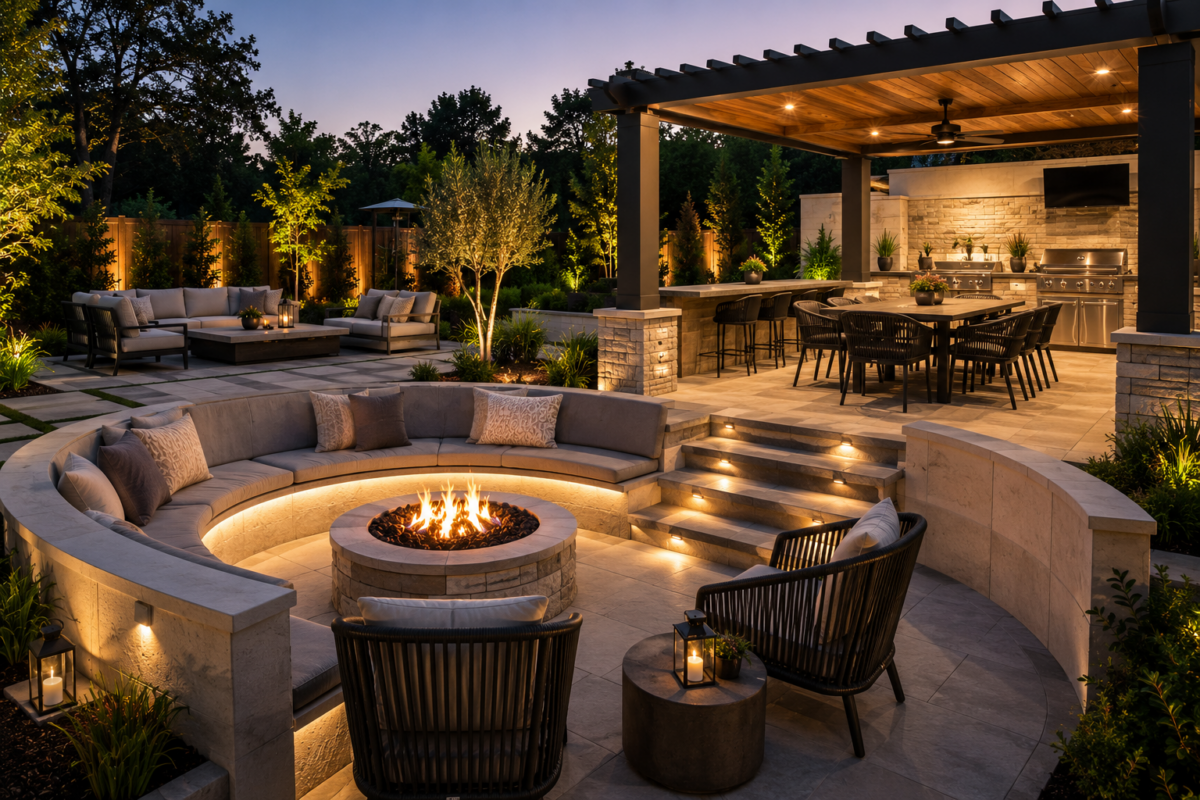

One of the biggest mistakes homeowners make when planning a backyard renovation has nothing to do with pavers, plants, lighting, or even budgets. It comes down to something much simpler:
Seating.
More specifically, poorly planned seating. A backyard may look beautiful on paper, but if there is nowhere comfortable to gather, relax, eat, or entertain, the space often ends up underused.
This is one of the reasons some outdoor renovations feel amazing while others somehow feel unfinished. The difference is not always size or budget. It is thoughtful layout and how people actually use the space.
One important decisions homeowners face when planning an outdoor living area is whether to invest in built-in seating, movable furniture, or a combination of both. There is no single right answer.
The best solution depends on your backyard layout, entertaining habits, maintenance preferences, and how flexible you want the space to feel.
In this guide, we’ll walk through the pros and cons of both approaches and help you think through what makes the most sense for your outdoor space.
Why Outdoor Seating Matters More Than Most Homeowners Expect
When people imagine a backyard renovation, they usually think about larger features first.
A patio.
An outdoor kitchen.
A pergola.
A fire pit.
Landscape lighting.
But seating is what ultimately determines whether those features actually get used.
Think about your favorite outdoor spaces.
What makes them comfortable?
Usually, it is not just the design. It is how naturally people gather.
Can guests sit comfortably near the fire pit?
Is there a place for outdoor dining?
Can people move between conversation areas without feeling crowded?
Does the layout feel inviting?
Good seating creates flow.
It encourages people to stay longer, relax more, and actually enjoy the investment you made in the backyard.
That is why seating deserves more planning than many homeowners initially realize.
What Is Built-In Outdoor Seating?
Built-in seating refers to permanent or semi-permanent seating structures integrated directly into the hardscape design.
Common examples include:
- Seat walls
- Retaining wall seating
- Built-in benches
- Fire pit seating
- Integrated dining benches
- Concrete or masonry seating
Built-in seating is especially popular in professionally designed outdoor spaces because it feels intentional and integrated.
Rather than looking like furniture placed on a patio later, it becomes part of the architecture of the backyard.
You often see built-in seating surrounding:
- Fire pits
- Outdoor kitchens
- Dining spaces
- Retaining walls
- Conversation areas
When designed properly, built-in seating can make a backyard feel more polished and complete.
Why Homeowners Choose Built-In Seating
One of the biggest advantages is permanence.
Built-in seating is always there.
There is no setup.
No moving furniture.
No worrying about weather damage or storage.
For homeowners who entertain often, this can be extremely valuable.
Built-in seating also helps maximize space.
Unlike bulky furniture, seat walls and integrated benches often take up less room while accommodating more people.
This makes them especially useful in smaller patios or tighter backyard layouts.
Another major benefit is aesthetics.
Built-in seating tends to create a more custom, luxury feel.
When paired with pavers, retaining walls, fire features, or pergolas, it can dramatically improve the overall appearance of the space.
Many homeowners also appreciate that built-in seating generally requires less maintenance than furniture.
There are no cushions to store, frames to rust, or pieces to replace.
The Downsides of Built-In Seating
The biggest downside is flexibility.
Once built, it stays where it is.
If your entertaining style changes or your family grows, rearranging the layout is not simple.
Comfort can also be a consideration.
Built-in seating usually benefits from cushions or softer materials to make long gatherings more comfortable.
Without cushions, some homeowners find permanent seating less inviting than traditional outdoor furniture.
Built-in seating also typically requires a larger upfront investment because it becomes part of the construction process.
However, many homeowners view this as a long-term investment in both function and aesthetics.
What Is Movable Outdoor Seating?
Movable seating includes traditional outdoor furniture that can be rearranged, replaced, or updated over time.
Examples include:
- Outdoor sofas
- Dining chairs
- Lounge furniture
- Adirondack chairs
- Sectionals
- Pool loungers
For many homeowners, movable seating feels more flexible and approachable.
Unlike built-in options, furniture can evolve with the space.
Need extra room for a party?
Move things around.
Want to refresh the look in a few years?
Swap pieces out.
This flexibility is one of the biggest reasons homeowners choose furniture-based layouts.
Why Homeowners Choose Movable Seating
Flexibility is the biggest advantage.
Outdoor furniture allows spaces to adapt.
This is especially valuable for homeowners who entertain differently throughout the year.
A seating arrangement that works for family dinners may not work for larger gatherings.
Movable furniture also tends to feel softer and more comfortable.
Deep cushions, sectional seating, and lounge-style furniture often encourage longer conversations and more relaxed entertaining.
Design flexibility matters too.
Furniture makes it easier to update the style of your backyard without a major renovation.
Changing color palettes, replacing worn pieces, or refreshing the look becomes much easier.
The Downsides of Movable Furniture
The biggest downside is maintenance.
Outdoor furniture eventually experiences wear from:
- Sun exposure
- Moisture
- Wind
- Dirt
- Pool chemicals
Cushions may fade.
Frames may rust.
Fabric eventually wears out.
Storage also becomes a consideration.
Depending on climate, homeowners may need space to protect cushions or furniture during weather changes.
In some backyards, movable seating can also feel temporary or visually disconnected if not thoughtfully designed.
Fire Pit Seating: One of the Most Important Design Decisions
If your backyard includes a fire pit, seating deserves extra planning.
This is often where people gather naturally.
One common mistake homeowners make is not allowing enough room around the fire feature.
Too close and the space feels cramped.
Too far and conversation becomes difficult.
Built-in seating often works beautifully around fire pits because it creates a defined gathering zone.
Curved seat walls can feel especially inviting.
At the same time, movable lounge chairs create flexibility and often improve comfort.
For many homeowners, a combination of both works best.
Why the Best Backyard Layouts Usually Combine Both
In reality, most well-designed outdoor spaces use a combination of built-in and movable seating.
Rather than choosing one or the other, homeowners often get the best results by mixing both strategically.
For example:
A backyard may include:
- A built-in seat wall near the fire pit
- Movable lounge furniture beneath a pergola
- Dining seating near an outdoor kitchen
- Flexible seating for entertaining
This layered approach tends to feel both functional and visually balanced.
It also gives homeowners flexibility without sacrificing long-term design quality.
The goal is not just maximizing seats.
The goal is creating places people naturally want to spend time.
Common Outdoor Seating Mistakes Homeowners Make
One of the most common mistakes is designing for appearance instead of function.
Beautiful furniture means very little if the layout feels awkward.
Another common mistake is overcrowding.
Trying to fit too much seating into a space often makes a backyard feel smaller rather than more usable.
Poor traffic flow is another issue.
People should be able to move naturally between dining, lounging, and entertainment zones.
And finally, many homeowners underestimate comfort.
The best outdoor spaces invite people to stay.
That usually means prioritizing both layout and comfort equally.
Final Thoughts: Designing a Backyard That Actually Gets Used
A great backyard is not just about what looks good.
It is about what feels good to use.
Choosing between built-in and movable seating is really about understanding how you want to live in the space.
If you want permanence, cleaner lines, and integrated design, built-in seating may make sense.
If flexibility and comfort matter most, movable furniture may be the better fit.
For many homeowners, the best solution is often a thoughtful mix of both.
At Milan Build, we help homeowners design outdoor spaces that feel intentional, comfortable, and built around how people actually live. Whether you are planning a fire pit area, patio, pergola, outdoor kitchen, or complete backyard transformation, smart layout decisions can completely change how your space feels.
Planning a backyard renovation? Contact Milan Build to schedule a consultation and design an outdoor space you’ll actually use.