

If water pools in your yard after rain, your lawn turns muddy, your patio floods, or erosion keeps damaging your landscape, you likely have a drainage problem.
And unfortunately:
Drainage issues rarely fix themselves.
Over time, poor drainage can lead to:
- Dead grass
- Foundation concerns
- Erosion
- Retaining wall damage
- Patio settling
- Cracked hardscape
- Mold and moisture issues
- Expensive repairs
The good news?
Most drainage problems are preventable with the right planning and drainage system.
In this guide, we’ll walk through everything homeowners should know about backyard drainage, including:
- Common drainage problems
- Signs your yard has poor drainage
- What causes standing water
- Drainage solutions explained
- French drains
- Channel drains
- Yard grading
- Retaining wall drainage
- Cost expectations
- Common homeowner mistakes
By the end, you’ll understand what’s causing water issues in your yard and what solutions may work best for your property.
Why Backyard Drainage Matters More Than Most Homeowners Realize
Drainage is one of the least visible but most important parts of any landscape or hardscape project.
Many homeowners focus on:
- Pavers
- Patios
- Artificial turf
- Landscaping
- Outdoor kitchens
- Retaining walls
But none of those investments perform well if water is not managed properly.
Poor drainage can slowly damage outdoor improvements from underneath.
Water can:
- Wash away soil
- Undermine patios
- Cause pavers to shift
- Damage retaining walls
- Kill plants
- Create muddy areas
- Pool near foundations
Good drainage helps protect everything else.
Think of drainage as the hidden system that keeps your entire outdoor space functioning properly.
Signs You May Have a Backyard Drainage Problem
Not all drainage issues are obvious.
Sometimes the warning signs are subtle.
Here are the most common indicators homeowners should watch for.
1. Standing Water After Rain
One of the biggest warning signs is water that lingers after rain.
If puddles remain for:
- Several hours
- Multiple days
- Extended periods after irrigation
there is likely a drainage issue.
Standing water often points to:
- Poor grading
- Soil compaction
- Low spots
- Drainage system failures
2. Muddy Areas That Never Dry
Does one section of your yard always stay wet?
Even when the rest of the property dries?
This usually signals:
- Drainage imbalance
- Poor soil absorption
- Low elevation
- Water runoff concentration
These areas often become unusable and frustrating for homeowners.
3. Soil Erosion
If soil is washing away during rain, drainage may be contributing to erosion.
Signs include:
- Exposed roots
- Washed-out mulch
- Bare patches
- Sloped landscape damage
- Shifting soil
Without correction, erosion usually worsens over time.
4. Water Pooling Near Your Foundation
This is one of the most serious warning signs.
Water collecting near your home may increase the risk of:
- Foundation moisture
- Structural damage
- Mold concerns
- Water intrusion
Proper grading and drainage are especially important around structures.
5. Cracking or Shifting Hardscape
Patios, walkways, and pavers should remain stable.
When water undermines the base beneath hardscape surfaces, homeowners may notice:
- Uneven pavers
- Cracks
- Settling
- Movement
Drainage issues are often the hidden cause.
What Causes Poor Backyard Drainage?
Several factors may contribute to drainage problems.
In many cases, multiple issues are happening at once.
Poor Yard Grading
Grading refers to the slope of your property.
Water should naturally move away from:
- Your house
- Outdoor living spaces
- Hardscape features
If grading is incorrect, water collects in low areas instead of draining away.
Poor grading is one of the most common drainage problems homeowners face.
Compacted Soil
Some soil types absorb water poorly.
Clay-heavy soil, in particular, drains slowly.
Compacted soil also prevents water absorption.
This often leads to:
- Pooling
- Mud
- Runoff
- Lawn damage
Improper Downspout Placement
Roof runoff can create major problems.
If gutters and downspouts dump water into the wrong areas, homeowners may experience:
- Erosion
- Foundation issues
- Saturated landscaping
- Standing water
Sometimes simple drainage redirection solves larger problems.
Hardscape Without Proper Drainage Planning
Patios, driveways, turf, and walkways should always be designed with water flow in mind.
Poor hardscape planning may trap water instead of redirecting it.
This is why proper slope matters during installation.
The Most Common Backyard Drainage Solutions
The right drainage solution depends on your yard, slope, soil, and specific water problem.
Here are the most common systems homeowners should understand.
1. French Drains
French drains are one of the most effective drainage solutions for many residential properties.
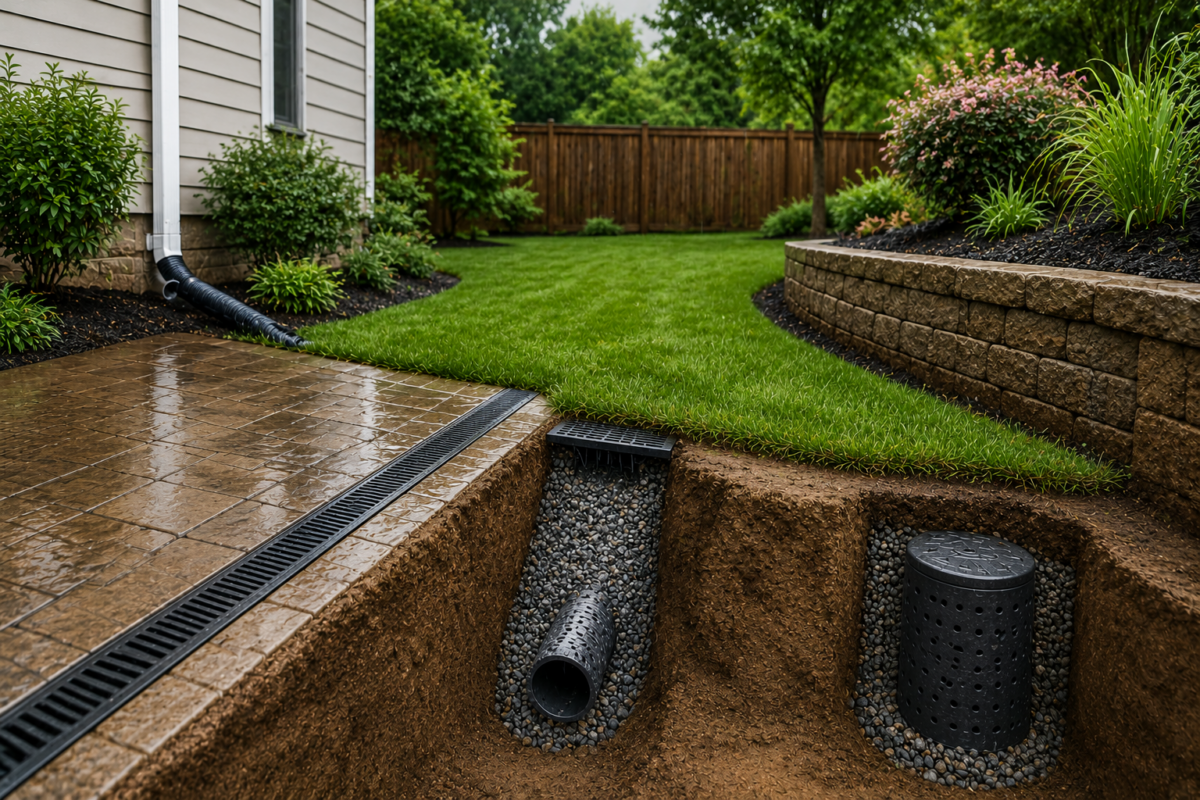
A French drain is a trench filled with gravel containing a perforated pipe that redirects water away from problem areas.
Best For:
- Standing water
- Saturated lawns
- Yard drainage
- Water near foundations
- Slope runoff
How It Works
Water enters the trench and flows through the pipe toward a safe discharge point.
French drains are often installed:
- Along yards
- Around foundations
- Behind retaining walls
- Near patios
When installed correctly, they are highly effective and mostly invisible.
2. Channel Drains
Channel drains are commonly used around hardscape surfaces.
You may see them installed near:
- Patios
- Driveways
- Pool decks
- Concrete areas
- Paver systems
These narrow drains collect surface water and move it away efficiently.
Best For:
- Hardscape drainage
- Pooling water on patios
- Concrete runoff
- Driveway water management
Channel drains are especially important when hardscape creates large non-porous surfaces.
3. Yard Grading & Regrading
Sometimes the problem is not a drain.
It is the slope of the yard itself.
Regrading adjusts the elevation and pitch of the property so water naturally moves where it should.
Best For:
- Major drainage problems
- Pooling water
- Improper slope
- Foundation runoff concerns
In some cases, grading solves the issue without needing extensive drain systems.
4. Retaining Wall Drainage
Retaining walls must include drainage.
Without it, water pressure builds behind the wall.
This creates what contractors call:
Hydrostatic pressure
Over time this can cause:
- Leaning walls
- Cracks
- Bulging
- Structural failure
Retaining wall drainage often includes:
- Gravel backfill
- Drain pipes
- Weep systems
- Proper slope management
Skipping drainage is one of the biggest retaining wall mistakes homeowners make.
5. Dry Wells
Dry wells help disperse collected water underground.
They are often paired with:
- Downspouts
- French drains
- Surface drainage systems
Best For:
- Heavy roof runoff
- Limited drainage options
- Water collection areas
They work especially well where stormwater needs controlled dispersion.
How Much Do Backyard Drainage Solutions Cost?
One of the most common homeowner questions is:
“How much does backyard drainage cost?”
The answer depends on:
- The drainage issue
- Property slope
- Water severity
- Yard access
- Existing hardscape
- Drainage system type
- Excavation requirements
Some fixes are relatively simple.
Others require larger drainage redesigns to fully solve the problem.
Typical Backyard Drainage Cost Ranges
While every project is unique, homeowners often invest:
| Drainage Solution | Typical Cost Range |
|---|---|
| Basic grading improvements | $2,000 – $6,000+ |
| French drain installation | $3,000 – $12,000+ |
| Channel drain systems | $1,500 – $6,000+ |
| Retaining wall drainage upgrades | $3,000 – $15,000+ |
| Major drainage redesign | $10,000 – $40,000+ |
Pricing depends heavily on the complexity of the project and site conditions.
For example:
A small drainage correction in one area is very different from redesigning an entire sloped backyard with multiple runoff issues.
What Impacts Drainage Costs?
Several factors influence pricing.
Severity of the Water Problem
Minor pooling may require limited grading.
More severe problems may involve:
- Excavation
- Multiple drainage systems
- Retaining walls
- Water redirection
- Soil stabilization
Existing Hardscape
If patios, pavers, turf, or concrete already exist, drainage upgrades become more involved.
Sometimes sections must be removed and rebuilt to fix the issue correctly.
Yard Accessibility
Tight side yards or difficult equipment access often increase labor costs.
This is common in:
- Hillside homes
- Dense residential neighborhoods
- Backyard-only access projects
Drainage System Complexity
Simple fixes cost less.
Integrated drainage plans involving:
- French drains
- Catch basins
- Regrading
- Channel drains
- Dry wells
typically require greater investment.
Why Drainage Is Critical for Hardscape Projects
Drainage and hardscape go hand in hand.
A beautiful patio or outdoor space will not perform properly if water management is ignored.
Drainage for Pavers
Paver patios and walkways rely on a stable base.
Poor drainage may lead to:
- Sinking pavers
- Uneven surfaces
- Weed growth
- Water pooling
- Joint erosion
Proper grading and drainage help pavers last significantly longer.
Drainage for Artificial Turf
Many homeowners assume turf automatically solves drainage issues.
It does not.
Artificial turf still requires:
- Proper grading
- Compacted base layers
- Drainage planning
Otherwise, homeowners may experience:
- Standing water
- Odors
- Drainage failures
- Soft spots
A quality turf installation should always account for water movement.
Drainage for Concrete
Concrete may crack or shift if drainage is poor.
Water beneath slabs can create:
- Soil movement
- Erosion
- Cracking
- Settling
Proper slope and runoff management are essential.
Drainage for Retaining Walls
As discussed in our retaining wall guide:
Poor drainage is one of the leading causes of retaining wall failure.
Water pressure behind walls eventually leads to:
- Leaning
- Cracks
- Bulging
- Structural problems
This is why retaining wall drainage should never be skipped.
Common Backyard Drainage Mistakes Homeowners Make
Many drainage issues become expensive because they were ignored too long or installed incorrectly.
Here are some of the most common mistakes.
Mistake #1: Waiting Too Long
Small water issues often become bigger.
What starts as:
“Just a puddle”
can eventually turn into:
- Hardscape damage
- Erosion
- Foundation concerns
- Expensive repairs
Addressing drainage early usually saves money.
Mistake #2: Treating Symptoms Instead of Causes
Many homeowners try quick fixes such as:
- Adding more soil
- Filling puddles
- Installing temporary drains
without solving the actual issue.
The real problem is often:
- Grading
- Water flow direction
- Soil conditions
- Drainage design
Good drainage planning solves root causes.
Mistake #3: Ignoring Water Flow During Hardscape Projects
Patios, turf, and pavers should never be installed without considering water movement.
Water always needs somewhere to go.
Poor planning can trap water around expensive outdoor improvements.
Mistake #4: DIY Drainage Without a Plan
Some drainage improvements are manageable.
Others require understanding:
- Property slope
- Runoff direction
- Soil composition
- Water volume
- Structural grading
Improper drainage installation may accidentally make problems worse.
Mistake #5: Choosing the Cheapest Solution
The lowest-cost drainage fix is not always the best solution.
Temporary fixes often lead to repeated problems.
The goal should be:
Solving the drainage issue permanently.
When Should You Call a Professional?
You should consider a drainage evaluation if you notice:
- Standing water after rain
- Patio flooding
- Muddy areas
- Erosion
- Retaining wall movement
- Water near foundations
- Pavers sinking
- Yard runoff issues
The sooner drainage problems are identified, the easier they are usually to fix.
Frequently Asked Questions About Backyard Drainage
What is the best drainage solution for standing water?
It depends on the cause.
Common solutions include:
- French drains
- Regrading
- Dry wells
- Surface drains
A site evaluation usually determines the best option.
Are French drains worth it?
For many properties, yes.
French drains can be highly effective when installed correctly.
They often provide long-term relief from standing water and runoff problems.
Can drainage problems damage patios or pavers?
Absolutely.
Water can weaken the base beneath hardscape surfaces and cause settling, shifting, or cracking.
How do I know if my yard needs regrading?
Signs often include:
- Pooling water
- Water flowing toward the house
- Persistent muddy areas
- Uneven drainage
Will artificial turf fix drainage problems?
Not necessarily.
Turf still requires proper grading and drainage underneath.
Installing turf without solving drainage issues may simply hide the problem temporarily.
Final Thoughts: Good Drainage Protects Your Entire Outdoor Investment
Drainage may not be the most exciting part of a landscape or hardscape project, but it is often one of the most important.
When done properly, drainage helps:
- Protect patios
- Prevent erosion
- Improve yard usability
- Extend hardscape lifespan
- Protect retaining walls
- Prevent standing water
- Reduce long-term repair costs
Whether you are planning a new landscape project or dealing with existing drainage problems, addressing water flow early can save major headaches later.
At Milan Build, we design outdoor spaces with drainage in mind from the beginning, helping homeowners protect their investment while creating functional and beautiful landscapes.
Having drainage issues or planning a backyard renovation? Contact Milan Build to schedule a consultation and explore the best drainage solutions for your property.