
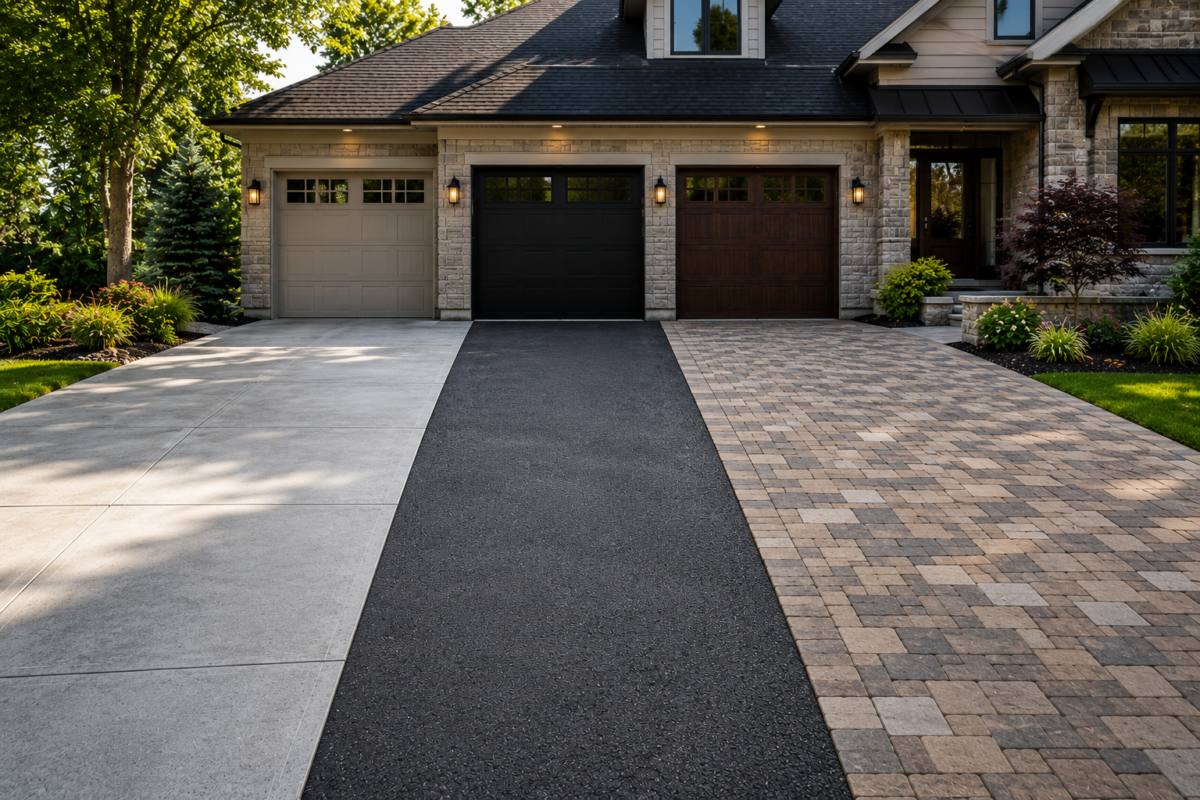

When planning a new driveway, patio, walkway, or outdoor living space, one of the biggest decisions homeowners face is:
Should you choose concrete, asphalt, or pavers?
Each material comes with its own advantages, drawbacks, costs, maintenance needs, and design possibilities.
And the truth is:
There is no one-size-fits-all answer.
The best material depends on:
- Your budget
- Design goals
- Maintenance preferences
- Climate
- Usage
- Long-term expectations
For example:
What works best for a driveway may not be ideal for a patio.
What performs well in high traffic areas may not provide the design flexibility homeowners want for outdoor living spaces.
In this guide, we’ll compare concrete, asphalt, and pavers so you can make a more informed decision before starting your project.
We’ll cover:
- Cost differences
- Durability
- Appearance
- Maintenance
- Drainage
- Repairs
- Lifespan
- Best applications
- Common mistakes homeowners make
By the end, you’ll have a much clearer understanding of which material makes the most sense for your property.
Quick Comparison: Concrete vs Asphalt vs Pavers
Before diving deeper, here is a quick overview.
| Feature | Concrete | Asphalt | Pavers |
|---|---|---|---|
| Upfront Cost | Moderate | Lower | Higher |
| Lifespan | 30 to 50+ years | 15 to 30 years | 30 to 50+ years |
| Repairs | Difficult to blend | Easier | Easy spot repairs |
| Appearance | Clean, versatile | Functional | Premium |
| Maintenance | Low to moderate | Moderate | Low |
| Drainage | Limited | Limited | Better drainage options |
| Heat | Moderate | Gets hot | Moderate |
| Curb Appeal | Good | Moderate | Excellent |
The right option depends on how the space will actually be used.
What Is Concrete?
Concrete is one of the most widely used hardscape materials for residential properties.
It is made by combining:
- Cement
- Sand
- Gravel
- Water
Once poured, concrete hardens into a durable surface suitable for:
- Driveways
- Patios
- Sidewalks
- Pool decks
- Outdoor spaces
Homeowners often choose concrete because it balances durability and affordability.
Modern concrete also offers design flexibility.
Popular finishes include:
- Smooth concrete
- Brushed concrete
- Stamped concrete
- Colored concrete
- Exposed aggregate
Pros & Cons of Concrete
Pros of Concrete
Durable & Long Lasting
When installed correctly, concrete can last:
30 to 50+ years
This makes it a solid long-term investment.
Lower Cost Than Pavers
Concrete is generally more affordable than premium hardscape materials.
Versatile Design Options
Stamped and decorative finishes can mimic:
- Stone
- Brick
- Tile
- Natural textures
Low Maintenance
Concrete generally requires:
- Occasional cleaning
- Sealing (depending on finish)
- Crack monitoring
Cons of Concrete
Cracking Can Happen
One of the biggest downsides:
Concrete can crack over time.
Causes may include:
- Soil movement
- Poor base preparation
- Drainage issues
- Tree roots
- Temperature shifts
Repairs Are Difficult to Hide
Concrete repairs often remain visible.
Patching color and texture perfectly can be difficult.
Drainage Limitations
Standard concrete surfaces are less permeable.
Poor drainage planning may cause pooling or runoff issues.
What Is Asphalt?
Asphalt is primarily used for:
- Driveways
- Roads
- Parking surfaces
It consists of aggregate materials bound together with asphalt cement.
Because asphalt is more flexible than concrete, it performs differently over time.
Many homeowners choose asphalt because of its lower upfront cost.
Pros & Cons of Asphalt
Pros of Asphalt
Lower Upfront Cost
Asphalt is often one of the more budget-friendly surface options.
Faster Installation
In many cases, asphalt installations can be completed quickly.
Easier Repairs
Cracks and damaged sections are often easier to patch than concrete.
Performs Well in Some Climates
Its flexibility can help reduce certain cracking issues.
Cons of Asphalt
Shorter Lifespan
Asphalt typically lasts:
15 to 30 years
This is often shorter than concrete or pavers.
Requires More Maintenance
Homeowners should expect:
- Sealcoating
- Crack repairs
- Surface upkeep
Heat Retention
Asphalt absorbs heat significantly.
During warm weather it may become very hot.
Less Design Flexibility
Compared to concrete or pavers, aesthetic options are limited.
Asphalt tends to be more functional than decorative.
What Are Pavers?
Pavers are individual units made from:
- Concrete
- Natural stone
- Brick
- Porcelain
They are installed piece by piece over a prepared base.
Pavers are commonly used for:
- Patios
- Walkways
- Pool decks
- Driveways
- Outdoor living spaces
For many homeowners, pavers offer the highest-end appearance and greatest design flexibility.
Pros & Cons of Pavers
Pros of Pavers
Premium Appearance
Pavers provide one of the most attractive finishes available.
They come in many:
- Colors
- Shapes
- Textures
- Patterns
This allows homeowners to create highly customized outdoor spaces.
Easy Repairs
If one section becomes damaged, individual pavers can usually be replaced.
Unlike concrete, repairs are less noticeable.
Excellent Longevity
When installed correctly, pavers can last:
30 to 50+ years
Better Drainage Performance
Many paver systems allow better water movement between joints.
This can reduce pooling.
Cons of Pavers
Higher Initial Investment
Pavers generally cost more upfront due to:
- Materials
- Labor
- Base preparation
- Installation time
Installation Quality Matters
Improper installation may lead to:
- Settling
- Uneven surfaces
- Weed growth
- Drainage issues
A properly built base is essential.
Appearance & Curb Appeal Comparison
For many homeowners, aesthetics play a major role.
Concrete Appearance
Concrete offers a:
- Clean
- Modern
- Minimal look
Decorative finishes improve customization.
However, some homeowners feel plain concrete lacks character.
Asphalt Appearance
Asphalt tends to prioritize function over aesthetics.
It works well for driveways but is less common for luxury outdoor living spaces.
Pavers Appearance
Pavers are often considered the most visually appealing option.
They can elevate:
- Backyard patios
- Entryways
- Outdoor kitchens
- Pool areas
- Driveways
For homeowners prioritizing curb appeal, pavers are often the premium choice.
Durability & Lifespan Comparison
Concrete Lifespan
30 to 50+ years
with proper installation and maintenance.
Asphalt Lifespan
15 to 30 years
depending on climate and maintenance.
Pavers Lifespan
30 to 50+ years
and sometimes longer with quality installation.
Base preparation and drainage matter significantly for all three.
Maintenance Comparison
Concrete Maintenance
Typically includes:
- Cleaning
- Sealing
- Crack monitoring
Asphalt Maintenance
Typically includes:
- Sealcoating
- Crack repair
- Periodic resurfacing
Paver Maintenance
Typically includes:
- Occasional cleaning
- Joint sand replacement
- Weed prevention
- Minor leveling if needed
Many homeowners appreciate how easy pavers are to repair compared to solid slab materials.
How Much Do Concrete, Asphalt & Pavers Cost?
One of the biggest deciding factors for homeowners is budget.
The good news?
There are quality options across a wide range of price points.
The important thing is understanding both:
upfront cost and long-term value.
Typical Cost Ranges
While every project is unique, homeowners often invest:
| Material | Typical Installed Cost |
|---|---|
| Asphalt | $7 to $15+ per sq. ft. |
| Concrete | $10 to $20+ per sq. ft. |
| Pavers | $18 to $40+ per sq. ft. |
Costs vary depending on:
- Site preparation
- Excavation
- Drainage needs
- Material quality
- Design complexity
- Accessibility
- Existing demolition
Premium finishes or difficult site conditions may increase pricing.
Asphalt Cost
Asphalt typically has the lowest upfront cost.
This makes it attractive for:
- Large driveways
- Budget-conscious projects
- Functional installations
However, lower upfront cost may come with higher long-term maintenance.
Concrete Cost
Concrete sits in the middle.
It often balances:
- Affordability
- Durability
- Appearance
Decorative finishes such as:
- Stamped concrete
- Colored concrete
- Exposed aggregate
typically cost more than standard concrete.
Paver Cost
Pavers generally require the largest upfront investment.
Why?
Because installation includes:
- Excavation
- Base preparation
- Individual placement
- Jointing materials
- Precision labor
However, many homeowners view pavers as a long-term investment because of durability, aesthetics, and repairability.
Best Material for Driveways
The best driveway material depends on your priorities.
Asphalt Driveways
Best for homeowners who want:
- Lower upfront cost
- Fast installation
- Practical function
Asphalt works especially well for larger driveways.
However, it generally requires more maintenance over time.
Concrete Driveways
Best for homeowners seeking:
- Clean appearance
- Long lifespan
- Moderate maintenance
- Better curb appeal
Concrete remains one of the most common residential driveway materials.
Paver Driveways
Best for homeowners prioritizing:
- Luxury appearance
- High curb appeal
- Long-term value
- Easier repairs
Paver driveways often stand out visually and can significantly elevate the look of a home.
For higher-end properties, pavers are often considered the premium choice.
Best Material for Patios & Outdoor Living Spaces
Patios require different priorities than driveways.
Comfort, aesthetics, and entertainment value matter more.
Concrete Patios
Concrete works well for:
- Modern patios
- Minimalist spaces
- Budget-conscious outdoor areas
Stamped concrete can create more visual interest.
Asphalt Patios
Asphalt is generally less common for patios.
Why?
Because homeowners typically prefer materials with stronger visual appeal for entertaining spaces.
Paver Patios
Pavers are often considered one of the best patio materials.
Why?
They offer:
- Premium appearance
- Better customization
- Design flexibility
- Easier repairs
- Excellent durability
Pavers pair especially well with:
- Outdoor kitchens
- Fire pits
- Seating areas
- Landscape lighting
- Pergolas
For outdoor living spaces, pavers are often a top choice.
Drainage Performance: Which Material Handles Water Best?
Drainage matters more than many homeowners realize.
Poor water management may lead to:
- Pooling
- Cracks
- Surface damage
- Settling
- Erosion
Concrete Drainage
Traditional concrete is less permeable.
Water generally runs off the surface.
This means proper slope and drainage planning are essential.
Without correct grading, water may pool.
Asphalt Drainage
Asphalt behaves similarly to concrete.
It sheds water across the surface.
Proper drainage planning still matters.
Paver Drainage
Pavers often perform better for drainage because joints between pavers allow more water movement.
Permeable paver systems can improve water management significantly.
This may reduce:
- Pooling
- Runoff
- Surface water problems
Proper base preparation remains essential.
Heat & Climate Considerations
Some materials handle heat better than others.
Asphalt Heat
Asphalt absorbs significant heat.
During warmer months, surfaces can become extremely hot.
This is especially noticeable in direct sunlight.
Concrete Heat
Concrete generally stays cooler than asphalt but may still warm up.
Lighter colors often perform better.
Pavers Heat
Pavers vary depending on:
- Material
- Color
- Exposure
Lighter-colored pavers tend to remain more comfortable.
Natural stone options may perform differently than concrete pavers.
Repair Comparison
Every outdoor surface eventually experiences wear.
The difference is how easily repairs can be made.
Concrete Repairs
Concrete repairs may be difficult to hide.
Patching often creates noticeable color differences.
Cracks may also continue expanding over time.
Asphalt Repairs
Asphalt is generally easier to patch.
However, patched areas may still remain visible.
Periodic resurfacing may eventually be needed.
Paver Repairs
Pavers are often the easiest to repair.
Damaged sections can usually be removed and replaced individually.
This is one reason many homeowners appreciate pavers long term.
Common Mistakes Homeowners Make
Mistake #1: Choosing Based Only on Price
The cheapest option is not always the best long-term investment.
Consider:
- Lifespan
- Maintenance
- Repairs
- Appearance
- Property value
Mistake #2: Ignoring Drainage
Water problems can damage any material.
Drainage planning should happen before installation.
Not after problems appear.
Mistake #3: Choosing the Wrong Material for the Space
The best driveway material may not be the best patio material.
Think about:
- Function
- Traffic
- Design goals
- Comfort
Mistake #4: Hiring Based on Lowest Bid
Proper base preparation matters enormously.
Cheap installation often leads to:
- Cracking
- Settling
- Drainage problems
- Early failure
Frequently Asked Questions
Are pavers better than concrete?
Not necessarily.
Pavers offer:
- Better aesthetics
- Easier repairs
- Premium appearance
Concrete often costs less upfront.
The best choice depends on priorities.
Is asphalt cheaper than concrete?
Usually yes.
However, asphalt often requires more maintenance over time.
What lasts longer: concrete or pavers?
Both may last:
30 to 50+ years
when installed properly.
Pavers often have an advantage for repairs.
Do pavers increase home value?
In many cases, yes.
High-quality hardscape improvements often improve curb appeal and outdoor living appeal.
Which material is best for drainage?
Pavers generally perform best, especially permeable systems.
However, all surfaces require proper grading and drainage planning.
Final Thoughts: Which Material Is Best?
There is no universal winner.
The right material depends on:
- Budget
- Design goals
- Maintenance preferences
- Functionality
- Long-term expectations
For homeowners prioritizing affordability and function:
Asphalt may make sense.
For a balance of durability and cost:
Concrete is often a strong option.
For premium appearance and long-term flexibility:
Pavers are often the preferred choice.
The most important factor is choosing a solution that matches how you actually use your outdoor space.
At Milan Build, we help homeowners design driveways, patios, walkways, and outdoor living areas that balance beauty, durability, and long-term performance. Whether you’re considering concrete, asphalt, or pavers, we can help guide you toward the right solution for your property.
Planning a driveway, patio, or outdoor hardscape project? Contact Milan Build to schedule a consultation and explore the best option for your space.