
When homeowners plan a kitchen remodel, they often focus first on the “big two”: cabinetry and countertops. However, the kitchen backsplash is the secret weapon of interior design. It is the visual bridge that ties your surfaces together, protects your walls from the rigors of cooking, and offers the perfect canvas to express your personal style.
At Milan Design + Build, we believe every detail should serve both form and function. In this guide, we’ll walk you through everything you need to know to choose a backsplash that stands the test of time.
1. Choosing the Right Material
The material you choose dictates the “vibe” of your kitchen. Here are the top contenders for modern San Diego homes:
-
Ceramic and Porcelain Tile: The most versatile options. They come in endless colors and patterns, from classic subway tiles to intricate Moroccan zellige.
-
Natural Stone (Marble, Travertine, Slate): For a luxury, high-end feel, nothing beats natural stone. Keep in mind that stone is porous and requires sealing to prevent staining from oils and sauces.
-
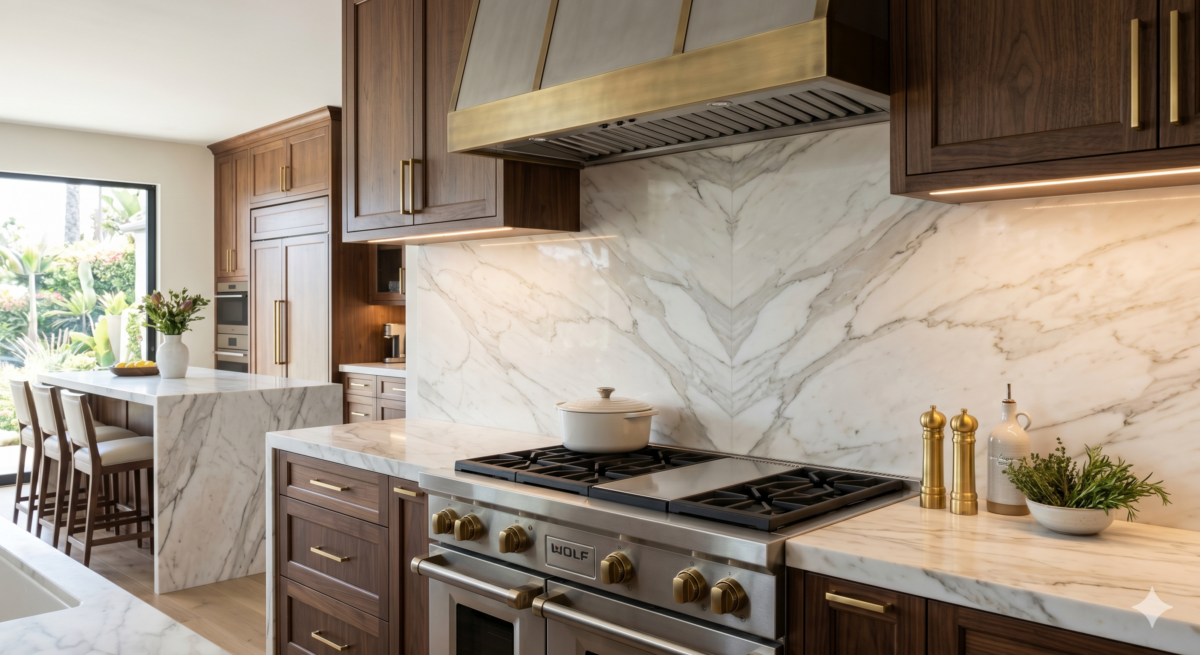
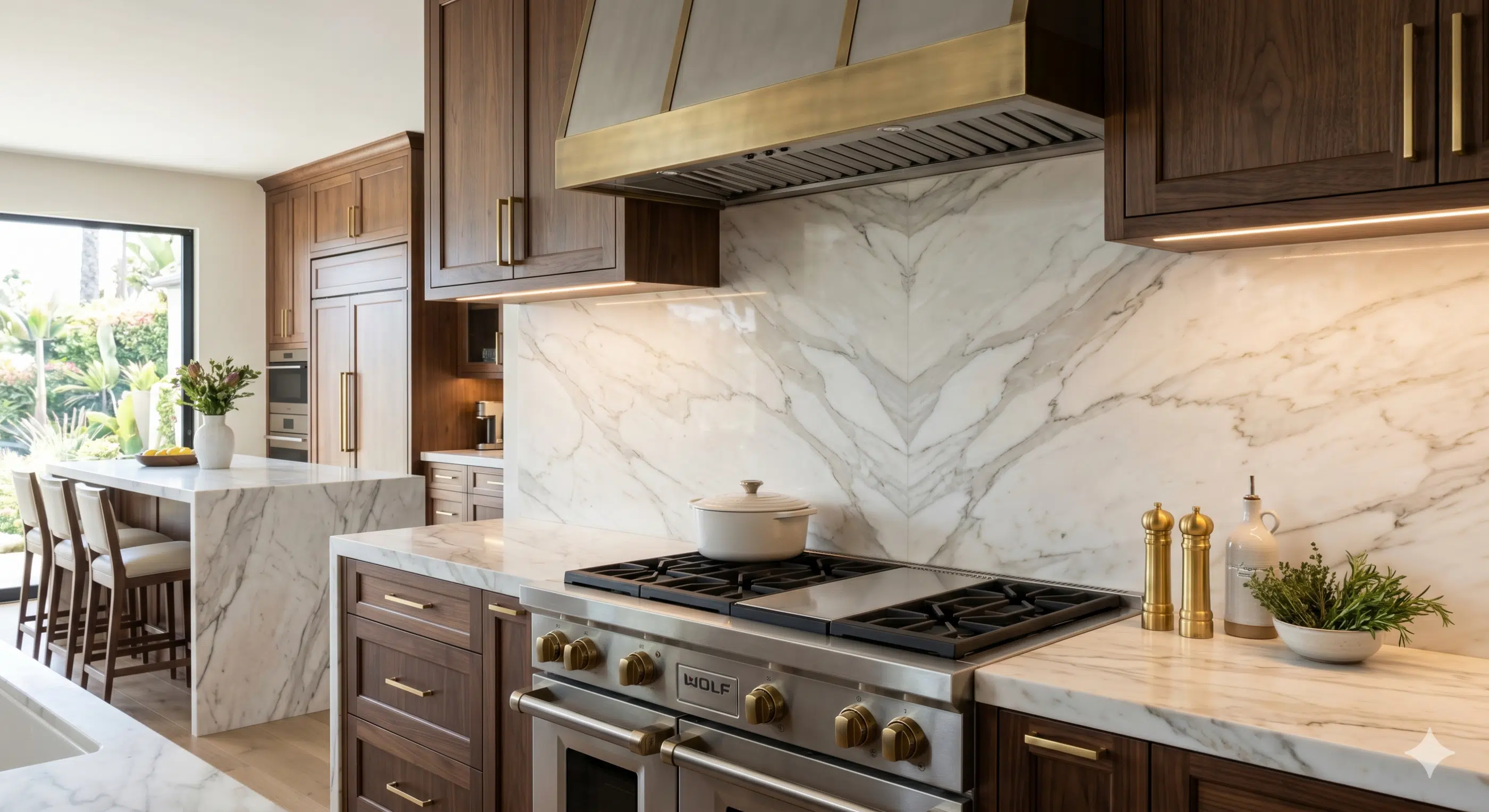
The “Slab” Backsplash: A growing trend in modern design is extending your countertop material (like Quartz or Marble) straight up the wall. This creates a seamless, grout-free look that feels incredibly sophisticated and is a breeze to clean.
-
Glass Tile: Ideal for smaller kitchens, glass reflects light and can make a space feel brighter and more expansive.
2. Functionality: Beyond the Beauty
While we want it to look stunning, the backsplash has a job to do. Consider these practical factors:
-
Ease of Cleaning: If you do a lot of high-heat sautéing, avoid heavily textured tiles or wide grout lines behind the stove. Smooth surfaces like large-format porcelain or solid slabs are the easiest to wipe down.
-
Heat Resistance: Ensure your material can withstand the heat of your range. While most tiles are fine, some peel-and-stick or plastic-based DIY options can warp.
-
Grout Choice: Don’t overlook the grout! Darker grout is better at hiding stains, while matching your grout color to your tile creates a unified, modern appearance.
3. Design Styles and Layouts
How you arrange your tile is just as important as the tile itself.
-
The Classic Subway: Timeless and clean. You can modernize it by using a vertical stack instead of the traditional offset pattern.
-
Herringbone: Adds movement and a sense of “designer” flair to the kitchen.
-
Ceiling-Height Backsplash: Why stop at the cabinets? Taking your backsplash all the way to the ceiling creates a dramatic focal point and makes your kitchen feel taller.
4. Coordinating with Your Countertops
The golden rule of backsplash design is balance.
-
If your countertops have heavy veining (like a dramatic Calacatta marble), opt for a simpler, understated backsplash.
-
If your countertops are a solid, neutral color, your backsplash is the perfect place to introduce a bold pattern or a pop of color.
5. Professional Installation Matters
A backsplash may seem like a small project, but the precision required—especially around outlets, corners, and under-cabinet lighting—requires an expert touch. Misaligned tiles or messy grout lines can detract from even the most expensive materials.
At Milan Design + Build, our integrated design and construction process ensures that your backsplash is perfectly leveled and seamlessly integrated with your cabinetry and electrical layout.
Ready to Start Your Kitchen Transformation?
Whether you’re dreaming of a sleek quartz slab or a hand-painted artisan tile, the team at Milan Design + Build is here to bring your vision to life