
Last Updated: August 2026
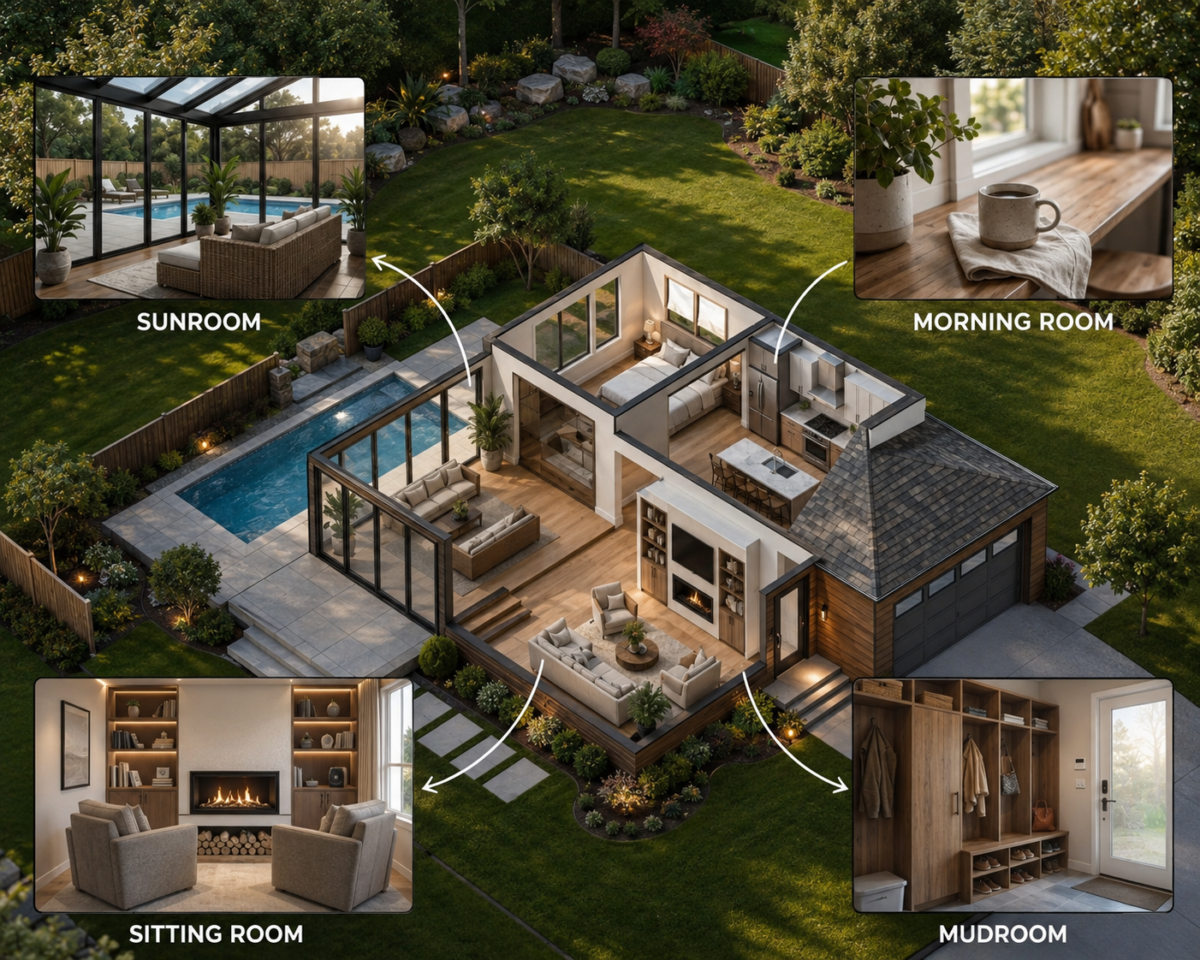
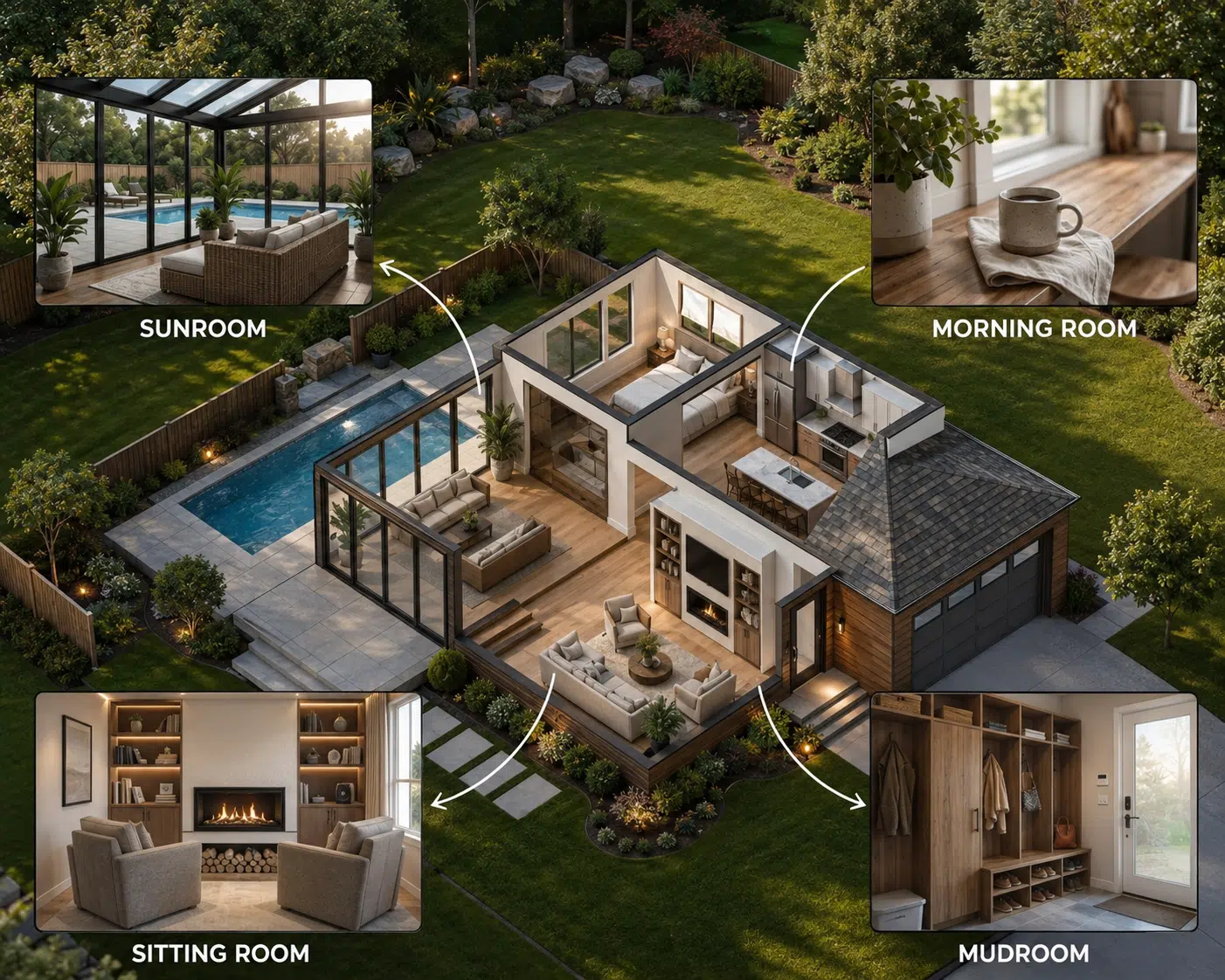
Homes are designed around how we live, relax, entertain, and move through our daily routines. While every home includes standard spaces like bedrooms and kitchens, specialized room additions—such as sunrooms, morning rooms, sitting rooms, and mudrooms—can dramatically improve your everyday lifestyle while boosting overall property value.
Whether you are expanding your living space through a custom home addition project or reconfiguring your existing interior layout, these room types serve very different structural, functional, and architectural purposes. Here is a breakdown of what makes each room unique, along with 2026 cost estimates, local San Diego building code considerations, and design pros and cons.
At a Glance: Room Additions Compared
| Room Type | Primary Purpose | Common Location | Typical Construction Scope | Average San Diego Cost Range (2026) |
| Sunroom | Maximize natural light & outdoor views | Rear or side yard addition | Exterior ground-floor bump out with high glazing | $25,000 – $80,000+ (3-Season vs. 4-Season) |
| Morning Room | Casual morning dining & quiet coffee time | Adjacent to kitchen or breakfast nook | Reconfigured interior space or minor bump out | $15,000 – $45,000 |
| Sitting Room | Intimate conversation & quiet reading | Extension of primary suite or entryway | Interior remodel or small bump out | $10,000 – $35,000 |
| Mudroom | Transition zone, shoe/coat storage | Main entryway or garage access door | Interior conversion or small entryway addition | $8,000 – $25,000 |
1. The Sunroom (3-Season vs. 4-Season)
A sunroom is an exterior addition designed to bring the feel of the outdoors inside while protecting you from direct heat, wind, and insects. It typically features floor-to-ceiling windows, sliding glass doors, and direct access to a patio or backyard.
3-Season vs. 4-Season Sunrooms
-
3-Season Sunrooms: Unconditioned spaces built without permanent heating or cooling connections. Ideal for mild coastal pockets like Pacific Beach or Encinitas, but can become uncomfortably warm or cool during temperature extremes.
-
4-Season Sunrooms: Fully conditioned living spaces connected directly to your home’s HVAC system. Built with insulated glass, framed walls, and continuous thermal barriers for year-round comfort anywhere in San Diego County.
Advantages
-
Floods your living space with year-round natural sunlight.
-
Blurs the line between indoor and outdoor living.
-
Expands usable square footage for dining, relaxing, or hosting guests.
Disadvantages
-
High glazing surface area requires regular cleaning.
-
Requires careful shading to prevent solar heat gain.
-
Requires full architectural plans, structural footings, and city permits.
San Diego Climate & Energy Code Considerations
Building a sunroom in San Diego requires balancing microclimates. A west-facing glass room in inland areas like El Cajon, Poway, or Escondido will experience intense afternoon heat, making low-E glass coatings, roof overhangs, and exterior motorized shades essential.
Furthermore, California Title 24 Energy Standards strictly regulate the percentage of allowable window glazing relative to total wall area in conditioned additions. Working with an experienced design-build contractor ensures your sunroom passes energy compliance without sacrificing high-end window design.
2. The Morning Room
Originating in traditional European architecture, a morning room is a cozy space designed to catch early sunlight.
Key Characteristics
-
Orientation: Typically features east-facing windows to welcome soft morning light without absorbing harsh afternoon heat.
-
Placement: Located directly off the kitchen or dining nook.
-
Function: Used for morning coffee, casual family breakfasts, reading, or light administrative tasks.
Unlike a sunroom, a morning room does not need to be built as a standalone full-glass addition. It is often created by reconfiguring an underutilized floor plan or executing a small first-floor bump out.
3. The Sitting Room
A sitting room is a refined, quiet space dedicated to relaxation, reading, or quiet conversation away from televisions and household distractions.
Ideal Uses
-
Primary Bedroom Suite Extension: Placed within or directly off a primary bedroom to create a resort-style retreat.
-
Formal Parlor: Located near the front entryway of historic homes (such as those in South Park or Mission Hills) as a formal reception space.
4. The Mudroom
While rare in older Southern California homes, mudrooms have become a high-demand home addition in modern San Diego remodels.
Ideal Uses
-
Organized Storage: Built-in cubbies, coat hooks, shoe lockers, and bench seating.
-
Sand & Beach Clean-Up: Serves as a transitional buffer between the garage, backyard, or outdoor shower and your clean living space.
-
Pet Wash Stations: Many modern San Diego mudroom additions incorporate built-in dog washing tubs and tile floors for easy cleanup after hikes or trips to the beach.
Permitting & Regulations for San Diego Additions
Whether you choose to build a sunroom or expand your ground floor for a mudroom or morning room, any physical addition to your home requires approval from the City of San Diego Development Services Department (DSD) or your local municipality:
-
Property Setbacks: Additions must remain within strict front, side, and rear yard boundary limits.
-
Floor Area Ratio (FAR): Local zoning caps the total allowable indoor square footage based on your lot size.
-
Coastal Overlay Zone: Properties west of Interstate 5 are subject to Proposition D’s 30-foot height limit and strict coastal development permits.
Before committing to a room concept, consult our complete guide on how to plan for a room addition to understand project timelines, architectural phases, and budgeting strategies.
Which Addition Is Right for Your Home?
-
Choose a Sunroom if: You want to capture expansive views, maximize natural light, and create a seamless bridge to your pool or patio.
-
Choose a Morning Room if: You want a casual, sunlit extension of your kitchen without the high structural cost of full-glass walls.
-
Choose a Sitting Room if: You want to upgrade your master suite into a multi-functional sanctuary.
-
Choose a Mudroom if: Your household needs structured entry storage to keep dirt, beach sand, and clutter out of the main living spaces.
Ready to Expand Your San Diego Home?
Navigating zoning rules, Title 24 energy requirements, and structural framing requires an experienced local team. Milan Design + Build handles every stage of your project under one roof—from initial architectural drawings to final construction.
Book a Free Consultation with Milan Design + Build Today to discuss your home addition ideas with our structural design experts.